
Emergency Power Systems for Mission-Critical Operations
BOS Power delivers complete emergency power systems for operations where uptime, compliance, and continuity are critical. Across the Nordics, we combine engineering, system integration, documentation, testing, and lifecycle service in one solution built for secure 24/7 operation.
One Partner for the Complete Emergency Power Solution
Critical operations need emergency power systems that are properly engineered, integrated, tested, and supported over time. BOS Power delivers the full solution, from design and system integration to commissioning, service, and long-term reliability.
When Downtime Is Not an Option
For CTOs, COOs, Facility Managers, and infrastructure leaders, emergency power is not a technical detail. It is a strategic safeguard
Unplanned outages can result in:
- Operational shutdowns
- Data loss or SLA breaches
- Regulatory non-compliance
- Financial penalties
- Reputational damage
- Risk to health and safety
Emergency power systems must therefore be:
- Correctly dimensioned
- Properly integrated
- Tested under real conditions
- Maintained throughout their lifecycle
- Documented for compliance and audits
We design systems that perform when they are needed most.
Emergency Power for Critical Sectors

High-availability environments require resilient power architectures with redundancy, synchronization capability, and predictable performance.
We deliver diesel generators and DRUPS systems tailored to your Tier requirements, load profiles, and regulatory expectations. Our solutions are designed for seamless integration with UPS systems, switchgear, and monitoring platforms.

Hospitals, laboratories, and life science facilities depend on uninterrupted power to protect patients, research, and critical equipment.
Our emergency power systems are engineered to support life-critical loads, medical compliance standards, and rigorous testing protocols.

Energy facilities, water utilities, transport systems, and digital infrastructure require robust and compliant backup power solutions.
We design systems that meet national and EU regulations, including emissions requirements and safety standards.

Production continuity, environmental safety, and contractual obligations depend on reliable backup power.
We tailor generator and fuel systems to operational requirements, available space, and runtime expectations.
Our Emergency Power Solutions
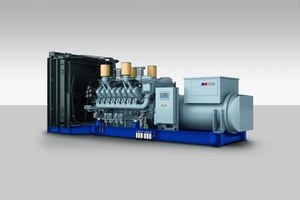
Proven emergency power systems for standby and prime power applications.
Best suited for:
- Data centers
- Hospitals and laboratories
- Industrial and infrastructure facilities
Available in a wide power range and configurable for redundancy, synchronization, and advanced control requirements.
Explore Diesel Generator Systems →
Explore →
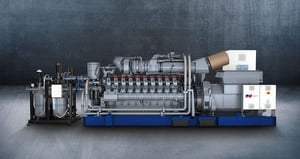
Emergency power solutions for applications where fuel strategy, emissions requirements, or operational preferences support gas-based systems.
Best suited for:
- Industrial facilities
- Infrastructure environments
- Selected mission-critical applications
Configured to meet site-specific requirements for performance, integration, and operational continuity.
Explore Gas Generator Systems →
Explore →
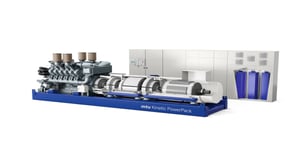
Integrated emergency power systems combining UPS functionality and generator power in one robust solution.
Best suited for:
- High-availability data centers
- Mission-critical infrastructure
- Facilities requiring seamless transition without battery dependency
Designed for high reliability, reduced complexity, and long-term operational resilience.
Explore DRUPS Solutions →
Explore →Turnkey System Integration
BOS Power delivers complete emergency power systems, engineered, integrated, and commissioned as one solution.
BOS Power provides:
- System design and engineering
- Load analysis and dimensioning
- Fuel system design and redundancy
- Ventilation and cooling design
- Control system integration and synchronization
- Installation and commissioning
- Documentation for compliance and audits
One responsible partner across the full delivery.
Lifecycle Reliability and 24/7 Service
Emergency power is only reliable if it is maintained, tested, and supported.
We provide:
- Preventive maintenance programs
- Scheduled and emergency service
- 24/7/365 support coverage
- Load testing and system validation
- Remote monitoring and diagnostics
- Fuel system management
- Compliance documentation and reporting
Our certified technicians operate across the Nordics, ensuring rapid response and long-term reliability.
For medium-sized companies, this means access to the competence and structure of a large system integrator – combined with dedicated and personal follow-up.
Proven in Mission-Critical Environments
Our emergency power systems support critical facilities across the Nordics.
Lorem ipsum dolor sit amet, consectetur adipiscing elit. Nunc euismod turpis a sem accumsan imperdiet. Vestibulum arcu leo, imperdiet a consequat nec, egestas sed libero. Donec vel interdum orci, ut hendrerit nunc.
Read the full case study →

Read the case study
Lorem ipsum dolor sit amet, consectetur adipiscing elit. Nunc euismod turpis a sem accumsan imperdiet. Vestibulum arcu leo, imperdiet a consequat nec, egestas sed libero. Donec vel interdum orci, ut hendrerit nunc.
Read the full case study →
BOS Power partnered with EcoDataCenter to design and integrate a resilient, scalable emergency power system built for data center uptime. A redundant setup and rigorous test regime enable secure operations today, with a foundation for future efficiency upgrades.
Read the full case study →
Read the case study
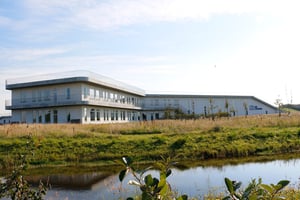
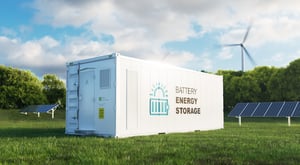
To secure district heating under strict downtime requirements, BOS Power delivered a hybrid solution combining mtu emergency power and mtu energy storage for DIN Forsyning. The system supports reliable backup operations while enabling a smoother transition toward greener energy and future-ready flexibility.
Read the full case study →
Read the case studyTechnical Insights
Generator ratings define how long and under what load conditions a generator set can operate.
- PRP (Prime Power): Continuous operation under variable load with a 24-hour average load factor typically limited to 70 percent.
- LTP (Limited Time Power): Maximum power output for up to 500 hours per year.
- ESP (Emergency Standby Power): Maximum power output during emergency conditions, typically limited to 200 hours per year.
- COP (Continuous Power): Base load operation at constant load for unlimited hours.
Correct rating selection is essential for compliance and system longevity.
Under EU legislation, generator sets subject to movement and below 560 kW mechanical engine output must comply with EU Stage V emissions requirements.
Stationary generator sets are generally not subject to Stage V, but national regulations and project requirements must always be evaluated.
We guide customers in selecting compliant solutions aligned with local legislation.
The most commonly used fuel for backup power in the Nordic region is HVO100.Fuel consumption typically averages approximately 0.25 liters per kWh produced, depending on load and system configuration.
Runtime requirements determine fuel tank design:
- Day tank solutions for limited runtime needs
- Combined day tank and external storage tank for extended runtime
- Redundant fuel transfer pump systems
- Dual-walled or spill-protected tank installations
Correct fuel system design is essential for resilience and environmental safety.
Generator systems require sufficient ventilation and combustion air.Design considerations include:
- Airflow calculation based on radiator and combustion demand
- Maximum air velocity over inlet grills
- Adjustment for flow resistance
- Back pressure evaluation
- Cooling system configuration
Improper ventilation design can reduce performance and system reliability. We ensure correct dimensioning from the outset.
Testing is essential to ensure performance under real conditions.Common test types include:
- Start tests
- Load takeover tests
- Parallel operation with grid
- Simulated mains failure
Testing frequency and method depend on system design and operational constraints.We help define and implement testing programs aligned with compliance requirements and operational realities.
The control system is the core of any emergency power installation.Modern control systems enable:
- Automatic mains failure detection
- Synchronization with grid
- Integration with building management systems
- Manual and automatic testing sequences
- Remote monitoring and diagnostics
Control systems are configured to match customer-specific operational and compliance requirements.
FAQ
PRP allows continuous operation under variable load, while ESP is limited to emergency use and typically restricted to a defined number of hours per year.
Runtime depends on load, fuel tank capacity, and system design. Extended runtime solutions require external storage tanks and redundant transfer systems.
Secure Your Emergency Power Strategy
Emergency power is a long-term operational safeguard. It requires correct engineering, proper integration, and reliable service.
Whether you operate a data center, hospital, infrastructure facility, or industrial plant, we help you design and maintain a system that performs when needed.
Talk to our specialists
Throughout the creation process and the entire lifecycle, you can count on us to take responsibility for your complete emergency power solution.
Your technical needs and requirements are the starting point for the solution we create as you deserve a system that runs smoothly and delivers maximum value over time.
Would you like to know more about diesel generator sets? Connect with sales & product experts.
- NORWAY
- DENMARK
- FINLAND
- SWEDEN
Fast charging station | Energy Storage
Sales | Power Generation